Old-Fashioned Botany Wall Hanging: A Vintage Design Collection
The Aesthetic of Time-Worn Botanical Art
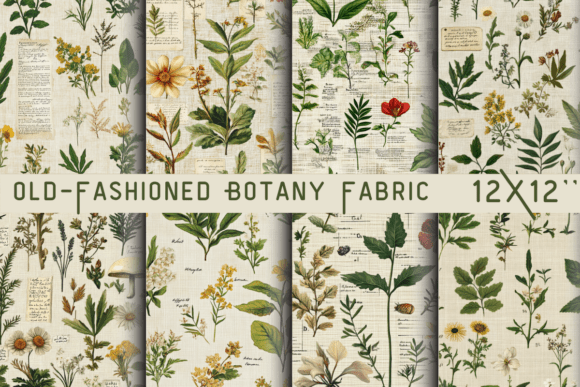
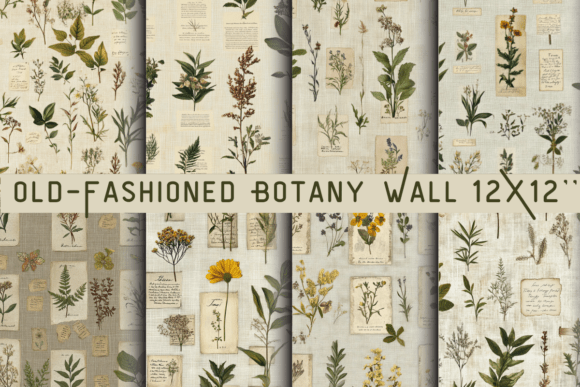
The Old-Fashioned Botany Wall Hanging collection isn't just a set of digital papers; it's a direct portal to the quiet elegance of a Victorian study or a naturalist's private gallery. This digital pack captures the specific, textured feel of antique botanical illustrations that have been physically mounted, aged, and displayed on rustic wall surfaces. The visual personality is one of scholarly nostalgia, combining the precise artistry of vintage plant drawings with the tactile, imperfect character of time-worn materials. You'll find faded sepia tones, antique cream backgrounds, muted olive greens, and dusty browns that speak of parchment and preserved history. Each design features opaque, non-transparent backgrounds, giving you the substantial, weighted look of actual mounted specimens or framed art pieces, complete with textured wall surfaces that add depth and authenticity to the composition.
The overall appeal lies in its ability to evoke a sense of heritage and cultivated taste. It’s a style that feels both intellectual and deeply personal, suitable for projects that aim to communicate tradition, nature, organic quality, and a touch of romantic decay. Unlike modern, crisp design assets, this collection embraces the beauty of imperfection and the passage of time, offering a sophisticated alternative for creators seeking depth over minimalism.
Where This Collection Finds Its Purpose
Understanding the practical applications of the Old-Fashioned Botany Wall Hanging collection is key to unlocking its value. Its core strength is in projects where texture, narrative, and a vintage aesthetic are paramount. For designers and brand strategists, this isn't a font for body text or a primary logo design element. Instead, it functions as a powerful design asset for creating mood, setting a scene, and establishing a specific brand identity that leans into heritage, artisanal quality, or botanical themes.
Its uses are wonderfully specific:
- Junk Journals & Scrapbooking: These PNG files are perfect for creating layered, textured backgrounds, ephemera sheets, and decorative elements that look like they were torn from an old book.
- Digital & Print Collages: Artists can use them as foundational layers or focal points in digital collage work, adding instant antiquity.
- Stationery & Planner Inserts: For printable crafts, these designs can form the basis of beautiful notecards, journaling cards, and planner dashboards with a cohesive vintage theme.
- Mockups & Presentations: Use them as sophisticated backgrounds for product mockups (especially for artisanal goods, skincare, teas, or books) or in pitch decks for brands with a vintage or organic ethos.
- Social Media Graphics: They provide a rich, engaging backdrop for quote graphics, announcements, or lifestyle content for accounts focused on gardening, history, literature, or slow living.
- Editorial & Packaging Design: In editorial design, they can set the tone for a feature article. In packaging design, they can influence the look of labels or wraps for products wanting to convey a time-honored, artisanal quality.
The collection is less about direct web design application (due to file size and niche aesthetic) and more about creating assets that are then used within a broader digital or print context. Its value is in its ability to instantly communicate a complex visual theme—a form of visual shorthand for "antique," "botanical," and "textured."
Practical Guidance for Implementation
Integrating a collection like this effectively requires a thoughtful approach, much like selecting a premium font for a major project. The goal is to ensure the asset enhances, rather than overwhelms, your work.
First, evaluate project fit. This is a display-oriented, thematic collection. Ask: Does my project need this specific vintage, museum-like ambiance? If you're designing a sleek tech startup's website, it's likely a mismatch. If you're creating a brand for a botanical illustrator, a heritage tea company, or a vintage stationery shop, it's a perfect fit. Consider how the color palette of faded sepia, antique cream, and muted olive will interact with your existing brand colors or typography.
Next, consider composition and layering. The 12x12 inch, 300 DPI PNGs are designed for high-quality print and detailed digital work. Because they are opaque and textured, think of them as your canvas. You might layer other vintage ephemera, text, or your own illustrations on top. For social media graphics, a single design can serve as a full-bleed background with text overlaid. For a scrapbook page, you might use one as a full page background and another as a smaller decorative element, creating visual hierarchy through scale and placement.
Font pairing is crucial when adding text. The ornate, textured nature of these backgrounds demands a typeface that can hold its own without competing. Avoid overly delicate script fonts or ultra-modern sans serif fonts that might clash. Instead, consider:
- A sturdy, classic serif font like Garamond or Baskerville for body text, which complements the vintage feel.
- A clean, humanist sans serif font (like Gill Sans) for smaller text or captions to ensure legibility against the busy background.
- A bold, decorative display font for headlines that echoes the era but remains clear.
Always test your text for readability over the background. The textured surfaces can be complex, so increasing text size, using a slight drop shadow, or placing text on a semi-transparent banner can help.
Finally, review the included styles and licensing. The pack includes 12 distinct designs, offering variety within a cohesive theme. Note the file sizes (8-18 MB) and plan your storage accordingly. While the collection is perfect for personal and many commercial projects like scrapbooking for sale or digital product creation, always verify the specific license terms for large-scale commercial use, such as on mass-produced physical goods, if that is your intention.
In essence, the Old-Fashioned Botany Wall Hanging collection is a specialized tool. Used with intention, it allows designers, crafters, and entrepreneurs to weave a rich layer of history and natural beauty into their work, transforming a simple project into a curated, tactile experience. It’s not just a background; it’s a story waiting to be told.