Crimson Meadow Reverie: A Vintage Countryside Design Suite
Capturing the Essence of a Bygone Era
In a digital landscape often saturated with sharp edges and hyper-modern minimalism, there is a distinct hunger for designs that feel grounded, warm, and deeply personal. Enter Crimson Meadow Reverie, a collection that acts less like a standard asset and more like a portal to a slower, more intentional time. This isn't just a set of pixels; it is a curated mood board brought to life, designed for creators who want their work to resonate with authenticity and tactile charm. It draws heavily on the cottagecore aesthetic but refines it with a sophisticated color palette that avoids looking kitschy or overly childish.
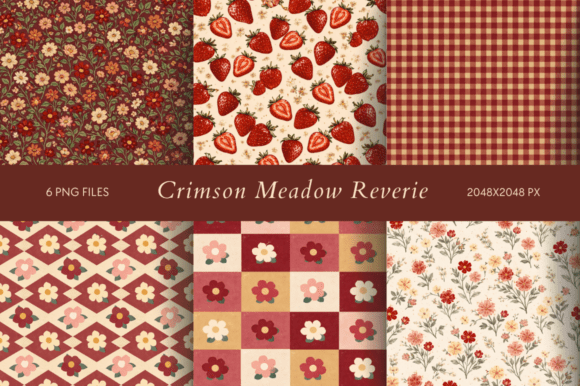
At its heart, this collection is defined by its harmonious color story. We are looking at a rich tapestry of burgundy, cream, blush, and muted greens. This specific palette is crucial because it balances warmth with earthiness. The burgundy provides a vintage anchor, reminiscent of aged wine or autumn berries, while the blush and cream soften the composition, preventing it from feeling heavy. The muted greens, inspired by the meadow aspect, offer a necessary counterpoint that feels organic and calming. For designers, this pre-selected palette removes the guesswork of color theory, ensuring that every element you place on the canvas feels immediately cohesive.
Visual Characteristics and Design Language
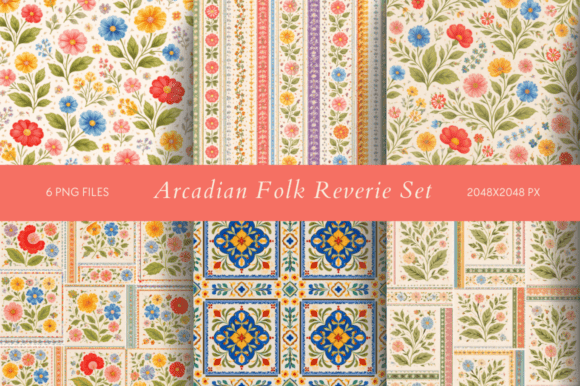
The "Reverie" in the title is earned through the specific textures and motifs used throughout the set. We see a thoughtful integration of soft florals that aren't overly symmetrical, mimicking the look of wildflowers rather than garden varieties. These are paired with delicate strawberries—a classic folk art motif that adds a playful, harvest-inspired touch without dominating the composition.
Perhaps the most versatile element is the inclusion of classic gingham and retro geometric patterns. These structural designs provide a necessary "resting place" for the eye amidst the organic florals. In design terms, this creates a rhythm. You can use the gingham to ground text-heavy areas, allowing the florals to act as accents or headers. The personality of these assets is distinctly nostalgic and whimsical, yet the execution is clean enough for professional commercial use. It strikes a rare balance: it feels handmade but looks polished.
Strategic Applications for Modern Creators
Understanding where a specific style like Crimson Meadow Reverie excels is key to maximizing its value. This collection is not a one-size-fits-all solution for a tech startup or a high-fashion runway, but for the right niche, it is pure gold.
Branding and Packaging Design
For small business owners in the artisanal food, skincare, or handmade goods sectors, this collection offers an immediate brand identity starter kit. Imagine a jam label using the strawberry motif as a border, or a soap company using the muted green textures for their box sleeves. The vintage aesthetic implies a product made with care and traditional methods. It tells a story before the customer even reads the ingredients. This is particularly effective for packaging design where shelf appeal relies on immediate emotional connection.
Digital Presence and Social Media
In the realm of web design and social media graphics, consistency is king. This collection allows bloggers and content creators to build a recognizable visual language across platforms like Instagram and Pinterest. The coordinated backgrounds work exceptionally well for quote cards, story highlights, and sale announcements. Because the palette is consistent, mixing and matching the backgrounds creates variety without visual chaos. A food blogger could use the strawberry pattern for recipe posts and the gingham for "behind the scenes" content, maintaining a cohesive feed that signals professionalism.
Editorial and Publishing
For authors and publishers, particularly those in the romance, historical fiction, or lifestyle genres, these assets serve as excellent chapter dividers or book cover backgrounds. The premium font and background pairing potential here is high. The textures are rich enough to support white or dark text overlays, provided you manage the contrast correctly. It evokes a sense of storytelling and imagination, making it perfect for magazines focusing on gardening, slow living, or vintage fashion.
Design Principles: Hierarchy and Readability
When working with intricate backgrounds like florals and gingham, the primary challenge is maintaining readability. A beautiful background is useless if it obscures your message. Here is how to handle Crimson Meadow Reverie with professional finesse.
First, consider visual hierarchy. These backgrounds are detailed, which means they have high visual texture. To make your text stand out, you need to create separation. This doesn't always mean a solid box. You could use a slight drop shadow on your heading text, or apply a subtle "frosted glass" overlay effect to the area where text will sit. This preserves the mood of the background while ensuring legibility.
Second, font pairing is critical. Because the collection is vintage and organic, pairing it with a hyper-modern, geometric sans serif font can create a jarring clash unless done very intentionally. Instead, look for a sturdy, clean serif font for body text—something that feels traditional but reads well at small sizes. For headlines, a script font or a handwritten font that mimics natural ink flow would complement the "Reverie" theme perfectly. Avoid overly complex display fonts for long paragraphs; save those for headers where the background texture can peek through the letterforms.
Practical Guidance for Implementation
Before integrating these assets into a commercial project, a few practical checks are necessary. Even the most beautiful design assets require a strategic eye.
- Evaluate Project Fit: Does your client or brand voice align with a soft, vintage aesthetic? If the brand voice is aggressive, urgent, or ultra-minimalist, this collection might send the wrong message. However, for brands focusing on comfort, nature, and tradition, it is ideal.
- Test Scalability: Check how the patterns look when tiled or stretched across large formats like trade show banners or print flyers. Ensure the resolution holds up so the textures don't become pixelated or muddy.
- Review Licensing: If you are using this for commercial use (e.g., selling merchandise, client work), ensure you have the appropriate license. This protects you legally and ensures the original creator is supported.
- Color Adjustments: While the included palette is beautiful, don't be afraid to adjust the hue or saturation slightly to match a specific client's hex codes. The "muted green" might need to be a touch darker for a specific logo, and that is okay.
Ultimately, Crimson Meadow Reverie