Vintage Sketch Village Scrapbook Paper: A Designer's Field Notes
There's a particular quality to a well-traveled notebook. It’s the scent of old paper, the weight of memories pressed between pages, and the sketches that capture a moment far more vividly than a photograph. The Vintage Sketch Village Scrapbook Paper collection channels this exact feeling, transforming your projects into tangible artifacts of a journey taken. It’s not just decorative paper; it’s a narrative toolkit, built from the ground up for creators who value atmosphere and story.
Beyond Decoration: The Anatomy of an Authentic Aesthetic
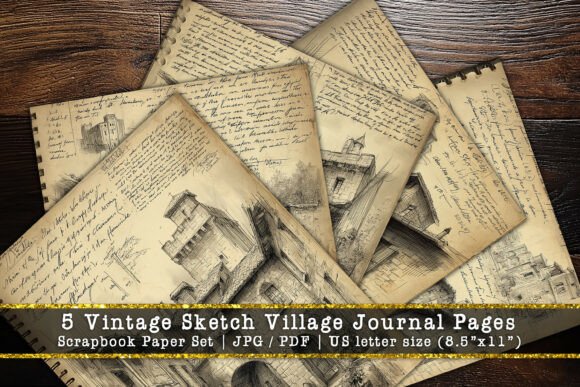
At first glance, you see the subject matter: charming, hand-drawn vignettes of antique Italian architecture, stone archways, and rustic facades. But the true value lies in the execution. This isn't a sterile digital rendering. The Vintage Sketch Village Scrapbook Paper set is steeped in the visual language of heritage design. The warm sepia tones mimic the natural aging of parchment, while the integrated vintage script and traveler's field notes add layers of authenticity. Each of the five unique pages offers a different compositional balance, providing both full-scene backgrounds and modular elements for collage.
The visual personality is one of understated elegance and intellectual curiosity. It evokes a sense of place—cobblestone streets, afternoon light on weathered stone, the quiet study of an architect's sketchbook. This makes it a powerful design asset that goes beyond simple scrapbooking. For a graphic designer, it offers a rich, textured foundation that can elevate a brand identity rooted in history, craftsmanship, or boutique travel. Imagine this aesthetic informing a café's packaging design, a heritage brand's logo design, or the interior spreads of a high-end editorial design project for a travel magazine.
Strategic Applications: From Personal Journals to Commercial Projects
Understanding where this collection works best is key to unlocking its potential. Its strength is in projects where texture, narrative, and a handmade feel are paramount.
- Junk Journals & Art Journals: This is its native habitat. Use the pages as-is for writing or background layers. Cut out individual architectural sketches to create pockets, tip-ins, or focal points on a spread. The included layouts are designed for this kind of deconstructive creativity.
- Heritage & Memory Keeping: For scrapbookers documenting family history, genealogy, or travel albums, this paper provides an instant, cohesive atmosphere. It sets a timeless tone that complements old photographs beautifully, adding depth to your creative paper crafts.
- Digital & Print Design: The 300 DPI, US Letter-sized JPG and PDF files are print-ready but also digital-friendly. Use them as backgrounds for social media graphics, website hero sections for boutique hotels or artisan products, or as textured layers in digital art. The professional resolution ensures crispness in both home printing and commercial output.
- Commercial & DIY Projects: Create unique handmade cards, envelope liners for wedding invitations, or decorative elements for small business packaging. The aesthetic lends itself to brands in the gourmet food, fine stationery, or specialty tourism sectors.
Integrating Texture into Your Design Workflow
When incorporating a premium font or a detailed asset like this, the principles of modern typography and layout still apply. The goal is harmony, not competition. Here’s how to approach it:
1. Establishing Visual Hierarchy
The sketches and textures are inherently detailed. To maintain readability and a clear focal point, pair them with clean, simple typography. A crisp sans serif font for body copy or a straightforward serif font for headings can provide a necessary counterbalance. Let the Vintage Sketch Village Scrapbook Paper provide the texture and mood, while your typography delivers the message with clarity.
2. The Art of Font Pairing
Consider the paper's handwritten notes. If you're adding digital text, you might echo that with a subtle script font or handwritten font for accents, but use it sparingly. A better strategy is often contrast: pair the organic, sketched paper with a geometric or humanist sans serif. This creates a dynamic between the analog and the digital, the historic and the contemporary, which is a hallmark of sophisticated web design and branding.
3. Practical Considerations for a Cohesive Brand
Before using this in a commercial project, consider its alignment with your brand identity. Does the "traveler's field notes" persona match your brand's voice? It’s perfect for conveying authenticity, artisanal quality, and a sense of discovery. For a tech startup, it might be a mismatch; for a boutique tour operator, it could be perfect. Always test a small section in your layout. Print a sample to check how the sepia tones interact with your chosen ink colors. Resize to A4 if needed for international projects, ensuring the detail remains sharp.
The Vintage Sketch Village Scrapbook Paper