Dark Academia Papers 9: Moody Vintage Scrapbook Papers
Capturing the Essence of a Scholarly Aesthetic
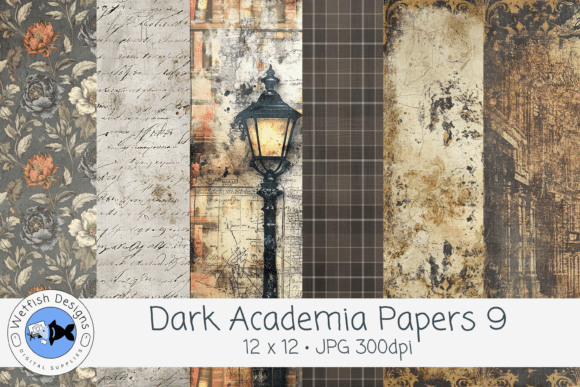
There’s a distinct mood that defines the Dark Academia aesthetic—one of candlelit studies, leather-bound volumes, and the quiet rustle of parchment. Dark Academia Papers 9 is a digital collection that captures this very atmosphere, offering creators a set of six high-resolution papers steeped in vintage character. This isn’t just a random assortment of textures; it’s a curated palette designed to evoke the feeling of an old library, a rain-streaked window overlooking a historic street, or the inside of a well-loved journal. The visual language here is one of elegant decay and intellectual nostalgia.
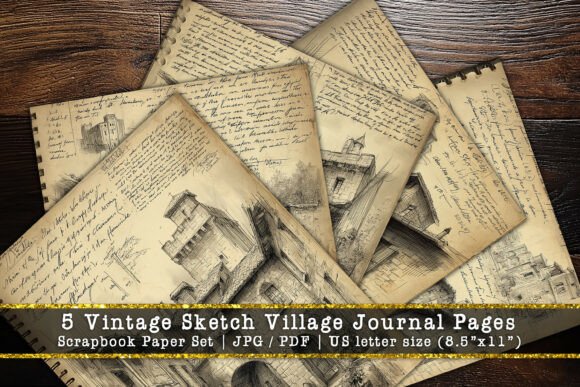
The collection’s strength lies in its nuanced layering. You’ll find antique handwritten manuscripts that look like they were penned by candlelight, delicate, muted florals pressed between the pages of a book, and classic plaid patterns reminiscent of a scholar’s worn blanket. Each design is overlaid with distressed, aged grunge effects and a warm sepia-and-charcoal palette, creating a sense of depth and history. These are the kind of design assets that don’t just sit in the background—they tell a story. For anyone working on projects that require a touch of the poetic, the historical, or the introspective, this set provides an instant foundation.
Where These Papers Bring a Project to Life
The practical applications for Dark Academia Papers 9 extend far beyond traditional scrapbooking, though they excel there. Consider a small business owner launching a candle brand inspired by old bookshops. These papers become the perfect backdrop for product photography, creating a cohesive mood on their website and social media graphics. They can also be printed as textured inserts for packaging design, wrapping the product in the brand’s narrative before the customer even lights the wick.
For the digital creator or blogger, these papers are invaluable for crafting visual content that stands out. Use them as backgrounds for quote graphics, podcast covers, or YouTube video thumbnails to establish a consistent, moody brand identity. In editorial design, they can serve as chapter openers or section dividers in a digital magazine or PDF guide, adding a layer of tactile realism. The 12x12 inch, 300 DPI JPG format ensures they are versatile for both digital and print. A crafter can print them for junk journal pages, while a graphic designer can use them at full resolution for crisp, high-quality invitations or book covers.
Integrating Vintage Texture with Modern Typography
The true power of a collection like this is realized when it’s paired with the right typeface. The moody, textured nature of these papers demands typography that can either complement or provide a clean contrast. A classic serif font with moderate contrast, like Garamond or Baskerville, will feel right at home, echoing the scholarly theme. For a more contemporary twist, pairing these backgrounds with a clean sans serif font can create a striking visual hierarchy, where the vintage texture supports modern readability.
Think about a logo design for a boutique publisher or a writer’s personal brand. The papers could inspire the color palette and texture of the logo mark itself. When selecting a creative font to pair with these assets, avoid overly ornate or thin script fonts that might get lost in the texture. Instead, consider a bold display font for headlines or a sturdy, elegant serif for body text. The goal is to ensure your message remains clear and professional, even amidst the rich visual noise. Testing font pairings directly on the papers is a crucial step—what looks clean on a white screen might need a slight adjustment in color or weight to maintain legibility on a textured, sepia-toned background.
Making the Most of Your Design Assets
When you acquire a set like Dark Academia Papers 9, you’re investing in more than just six files; you’re gaining a versatile toolkit. A good practice is to evaluate each paper’s “personality.” The manuscript paper might be ideal for a project about history or literature, while the lamplit street scene could be perfect for a mystery novel’s promotional material. Don’t be afraid to layer them—using one as a full background and another as a distressed frame or border element can create unique, custom compositions.
From a commercial standpoint, always review the licensing. These papers are typically offered for both personal and commercial use, which is essential for entrepreneurs and designers. This allows you to incorporate them into client work, sell printed crafts, or use them in marketing materials without concern. The key is to use these assets as a starting point. They provide the mood and the texture; your job is to layer on your own message, your own brand identity, and your own creative vision. The result is work that feels both authentic and deeply atmospheric, resonating with an audience that appreciates depth, history, and a touch of scholarly romance.